FDA Approves At-Home Brain Stimulation Device To Treat Depression
The FL-100 device is a wireless headset that uses tDCS to deliver low-intensity, non-invasive electrical stimulation to the prefrontal cortex.
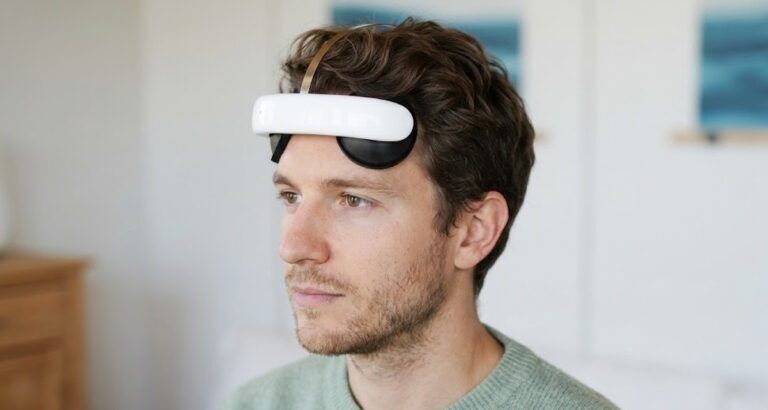
The FL-100 Device Helps Treat Depression At Home
The FDA approved the first at-home brain stimulation device in the United States to treat major depressive disorder (MDD), a mood disorder marked by persistent sadness, fatigue, and feelings of worthlessness that impacts daily functioning.
This is a game-changing alternative treatment for people who struggle with conventional antidepressant medications, such as SSRIs, due to unwanted side effects like weight gain and sexual dysfunction.
The FL-100 device, manufactured by Flow Neuroscience, was approved in early December 2025 and is scheduled for release in the US in the spring of 2026. It has already been used worldwide to treat more than 55,000 patients in Europe, the UK, Switzerland, and Hong Kong.
FL-100: The At-Home tDCS Wireless Headphone Device
The FL-100 is a first-of-its-kind headphone device that will be available by prescription for patients diagnosed with depression.
Unlike most brain stimulation therapies, this device is not limited to patients with treatment-resistant depression. The FL-100 device can be used as a standalone treatment or in conjunction with other treatments, such as antidepressants and psychotherapy, for people who have been diagnosed with depression that is not considered treatment-resistant (depression that does not significantly improve after two antidepressant medications at therapeutic dosages).
How Does It Work?
The FL-100 device is a wireless headset that uses transcranial direct current stimulation (tDCS) to deliver very low-intensity, non-invasive electrical stimulation to the prefrontal cortex via two scalp electrodes.
One of the many benefits of the FL-100 device is that its electrodes are built into the headphone band that sits over the prefrontal cortex, making it an easy-to-use and innovative tool for treating depression. The brain stimulation therapy is controlled by the Flow Neuroscience App, meaning the user must have internet access and a smartphone capable of downloading apps to use the headset.
According to Flow Neuroscience, a typical tDCS treatment with the FL-100 device is a 12-week course:
- Five 30-minute sessions per week for the first three weeks
- Two to three 30-minute sessions per week over the following nine weeks
The headset will cost approximately $500-$800 out of pocket, but Flow Neuroscience is exploring potential insurance coverage that could help reduce costs. This device is most likely HSA- and FSA-eligible with a prescription, which could make it more affordable than the out-of-pocket price.
Clinical Study Results
The Empower phase 2 study was published in Nature Medicine and included 174 adults who met the criteria for at least moderate depression, as measured by the Hamilton Depression Rating Scale.
Study participants were randomly assigned to two treatment groups: “active” tDCS or “inactive” tDCS. Both treatment groups used the same tDCS headphone device, but the inactive treatment group received no electrical current (placebo). After 10 weeks of use, the study found that 58% of people in the active treatment group achieved clinical remission, and over 38% achieved complete remission (no longer considered depressed).
What is Brain Stimulation Therapy?
Brain stimulation therapy delivers electrical or magnetic impulses to regulate brain activity in the prefrontal cortex, the area of the brain responsible for mood regulation. Electricity is delivered to the prefrontal cortex to activate underactive mood-regulating areas.
The most common brain stimulation therapy techniques include:
ECT: Electroconvulsive therapy (ECT) delivers high electric currents under anesthesia to induce a seizure as a way to “reset” brain activity. Instead of targeting only the prefrontal cortex, ECT delivers electrical currents to the entire brain. Temporary memory loss, confusion, and recovery time are the major side effects, and this treatment is reserved for patients who have treatment-resistant depression with severe symptoms.
TMS: Transcranial magnetic stimulation (TMS) is a less invasive brain stimulation approach to treat depression that targets the prefrontal cortex and generates a magnetic field that induces a strong, localized electric field in the brain. It does not involve direct electrical current flow through the scalp, unlike ECT and tDCS; however, it is administered only under direct medical supervision in a physician’s office and is FDA-approved only for treatment-resistant depression.
tDCS: Transcranial direct current stimulation (tDCS), such as the Flow Neuroscience’s FL-100 tDCS headset system, delivers low-intensity electric current through electrodes attached to the scalp into the brain, targeting the prefrontal cortex. This noninvasive approach delivers 0.5 to 2 milliamperes of direct current to the prefrontal cortex, compared to ECT, which delivers about 800 milliamperes to the brain.
tDCS is not limited to people with treatment-resistant depression and can be used as a standalone therapy or in conjunction with antidepressant medications and psychotherapy.
Brain Stimulation to Treat Depression
Depression is one of the most common causes of disability worldwide, affecting nearly 300 million people globally and 21 million adults in the US.
Conventional treatment for depression has primarily consisted of antidepressant medications and psychotherapy, though approximately 30% of people with depression do not respond to these conventional methods. A larger number (up to 57%) of people with depression do not seek treatment out of fear of medication side effects and stigma associated with being on antidepressants.
An at-home brain stimulation device, such as the FL-100 device, could help this population, ultimately making depression treatment more easily accessible to all.
Find Treatment For Depression
If you are experiencing symptoms of depression, make an appointment with your doctor or a mental health professional as soon as you can. Talking to your doctor about depression symptoms is the first step in getting help and feeling better.
Last Updated: