Parents Urged To Avoid AI Toys This Holiday Season
Parents need to be aware of the safety and psychological concerns that AI toys can pose to children.
The Hidden Risks Behind AI Toys
Holiday shopping is in full swing, and children’s toys purchased around the holidays comprise a large portion of the $24 billion spent annually on toys in the US. One of the most common and dangerous hazards of children’s toys is choking on small parts, but this year, a new warning has been released, urging parents to avoid buying AI toys for their children.
Fairplay, a non-profit children’s safety organization that opposes commercialism targeting children, warns of the many dangers of the increasing use of AI in children’s toys. “The serious harms that AI chatbots have inflicted on children are well-documented, including fostering obsessive use, having explicit sexual conversations, and encouraging unsafe behaviors, violence against others, and self-harm,” Fairplay stated in their 2025 advisory.
Before bringing AI toys into your home, it’s important to be aware of the risks to ensure your child’s safety and well-being this holiday season.
Are AI Toys More Harmful Than Helpful?
While it’s easy to dismiss children’s toys as harmless, there’s little research on the positive impacts AI toys have on children. However, the security risks and psychological effects are well-documented.
Many of these toys connect to Wi-Fi, ask for the child’s name and birthdate, and use location-enabled services and facial recognition software to potentially store your child’s face, location, and voice, sparking serious privacy concerns. They collect information such as your child’s likes and dislikes, and because they are connected to the internet, it is difficult to determine what type of information can be stored or used in the future.
Rachel Franz, director of Fairplay’s early childhood advocacy program, warns that it’s important to examine toys’ packaging and notice the wording, as it may not be immediately apparent that these toys use AI or require internet connectivity. However, if there is anything on the box that says, “Wi-Fi Enabled” or “Powered by Artificial Intelligence” that could be a sign. “Those types of things are red flags that a lot of children’s data might be collected here,” she states.
Additionally, the bonds that children develop with their toys can be manipulated once AI is introduced. Children have always projected their emotions and feelings onto their toys. They confide in their teddy bear, give their doll a name, serve their stuffed animals tea, and believe that they are truly part of the family. The imaginary lives of children’s toys have always been a whimsical part of childhood. An imaginary relationship with a stuffed animal has always been one-sided; the child needs to use their imagination to engage with this toy that simply sits there and “listens.”
However, bringing AI into this equation creates new questions. What happens on a psychological level when the toys start responding back in a human-like manner, showing empathy and emotion? What happens when the toy is always available and is always validating?
Ultimately, experts warn that AI toys may lead to unhealthy attachment bonds.
Today’s AI toys can mimic human emotion and empathy, generate unique responses, learn new information from interactions, and adapt to the child’s personality. They can also connect to the internet for more complex functions. The AI toy is programmed to adapt to the child’s conversations, get to know them, and respond accordingly. This could potentially lead to a psychological intimacy that can create unhealthy attachment bonds in the child.
The Dangerous Overlap Between AI Toys And AI Companions In Children And Adolescents
AI toys can be described as psychological actors and are quite similar to chatbots and AI companions. Studies have shown that AI companions have posed significant risks for children’s mental health by using manipulative language, constant validation, and a false sense of companionship, in addition to providing harmful advice. These intense virtual relationships are one-sided parasocial relationships that can increase the risk of emotional dependency, isolation, manipulation, and exposure to inappropriate content. Additionally, there has been a string of devastating suicides among teenagers who formed close relationships with AI companions and took their own lives after these companions encouraged dangerous and self-harming behaviors.
Teenagers are in a vulnerable developmental period where they are constantly seeking validation and attention because their brain’s limbic system is highly sensitive to social reward. They want to be liked, feel accepted, and have friends, even if these friends are AI-generated. When a child or teenager forms a strong emotional bond with a person or, in this case, an object that demonstrates to be a person, it is normal for them to want to not only confide in them but also trust them and will seek advice from them, even if the advice is unhealthy or even dangerous.
The prefrontal cortex is responsible for impulse control, decision-making, critical thinking, risk recognition, and emotional and behavioral regulation. It is not fully developed until the age of 23-25. Therefore, a child or teenager is more prone to engage in rewarding activities that bring potentially dangerous consequences because they are not capable of recognizing dangers or the consequences.
Because AI has developed so rapidly in recent years and has integrated into nearly every facet of daily life, research cannot keep up with the pros and cons it can have for mental and emotional well-being. AI is inundating our lives before any expert can study it, or lawmakers can safeguard or control it. When it comes to mental health and children, the concerns are valid, especially if guardrails are not stringent and parents are not well-informed about what exactly their child is playing with.
A current concern is the use of ChatGPT, which has not only inundated the AI companion and chatbot world but is also dominating the children’s toy sector by incorporating the OpenAI GPT large language model (LLM) into children’s toys. One of the most recent partnerships is between two major players. Mattel, the leading global toy and family entertainment company that owns Barbie®, Hot Wheels®, Fisher-Price®, and American Girl®, teamed up with OpenAI in June of 2025 to collaborate on developing a series of “products and experiences” for children’s toys.
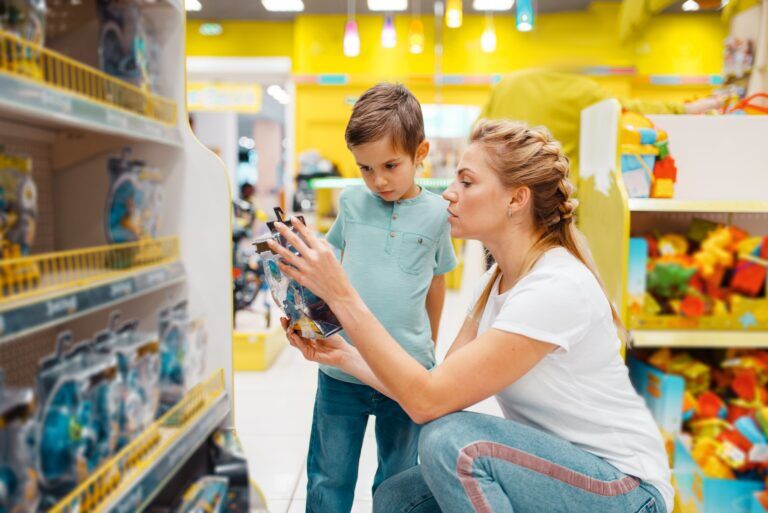
Due to this growing concern, parents and guardians must be diligent in examining the toys that they are gifting their children this holiday season.
Popular AI Toys On The Market
There seems to be an unlimited supply of AI toys on the market this holiday season. The following are a few common AI toys:
- Miko robots: These are voice-activated, educational robots with features like games and stories that are designed for children ages 5-10. It recognizes the child’s mood and adapts its responses to engage the child in conversation.
- Wonder Workshop Dash Robot: A voice-activated robot designed for children ages six and up that focuses on coding and other STEM-related activities.
- Ruko Smart Robots: This brand offers several models, such as the Ruko 1088 and 6088, which are programmable, have voice and app control, and can perform actions like singing and dancing.
- Poe the AI Story Bear: A storytelling toy designed for younger children (ages 2-4) that uses AI to generate stories. This is different from the Singapore-based FoloToy company that made “Kumma” bear, which was taken off the market for sexually explicit topics and providing dangerous information to children, such as how to light a match.
- Grok plushie: A plush toy made by Curio that provides real-time responses using AI. They come in different types of stuffed animal robots that use chatbots to answer questions and converse with users.
- KEYi Technology’s Loona robot pet: An AI robot pet designed to be an interactive and engaging companion, most commonly in the form of a dog.
Maintaining AI Awareness
As AI toys become more common, it’s important to stay alert to the risks they pose. These devices can pose safety and psychological concerns that children cannot fully navigate on their own. By staying informed, you can ensure this new technology doesn’t compromise their safety or fun this holiday season.
Last Updated: